


Two years ago I was looking for a Tatar cultural centre in Almaty and could not find one. Not because it did not exist, but because the link to it lived in someone’s private chat, not in a search engine. That irritation grew into the catalogue now called tatarverse.cc: 424 centres, communities and initiatives in 53 countries. Between the first line of code and the current version there was a shut-down project, a two-year pause and a complete change of approach.
The first attempt: tatars.kz
Late 2023. I set up a site on Astro, start collecting links to centres, add a resources section, a list of Telegram channels and Tatar-language learning material. The idea is simple: one site with everything on it.
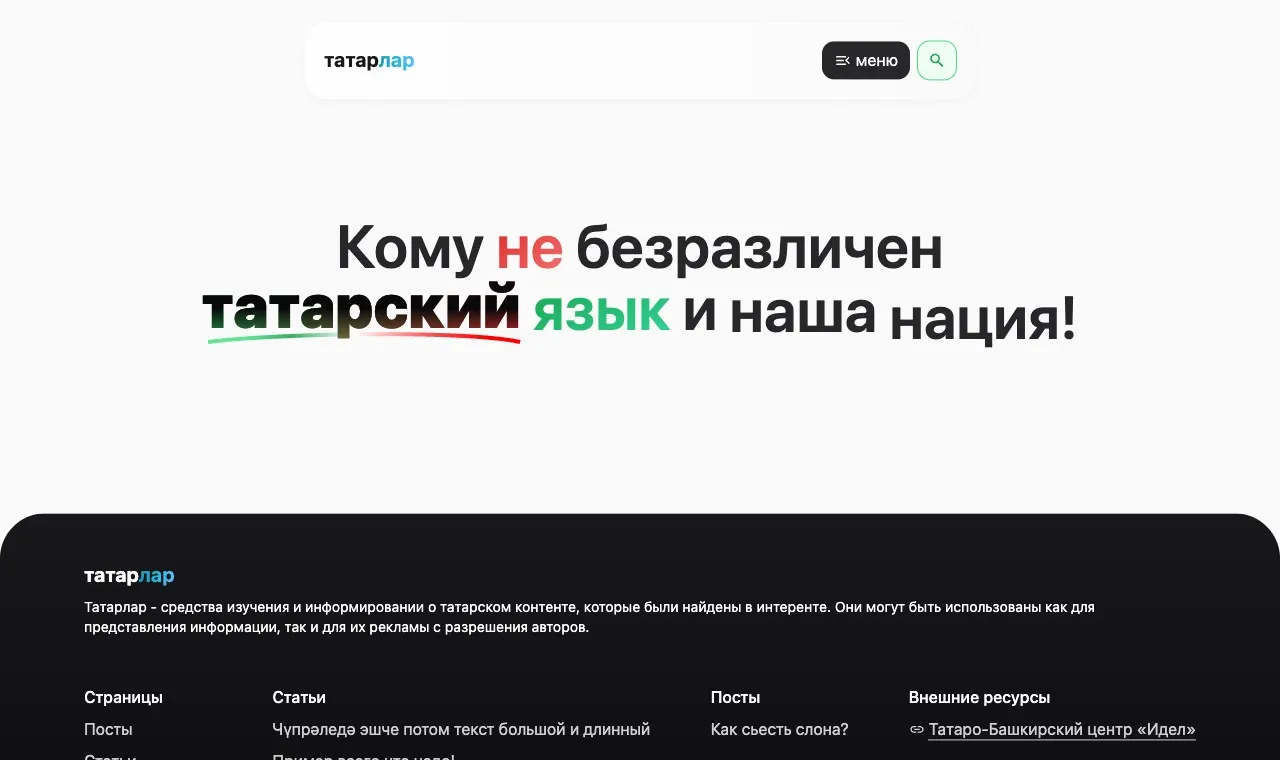
The project lived for over a year and stalled. The resources section had nothing to be checked against, the learning material had no author and no plan, and “one site for everything” in practice meant five weak sections instead of one strong one. Community feedback was close to none, because the site did not solve any single problem well enough for anyone to recommend it. I shut it down.
A pause, and a different question
I did not touch the project for the next two years. When I came back to it, the question had changed. Instead of “how do I build a site about everything Tatar,” I asked myself what exactly I could not find in Almaty two years earlier. The answer was narrow: a list of centres with addresses and contacts, filterable by country and city. Not media, not a textbook, not a news aggregator. A catalogue.
tatarverse.cc: a relaunch built on automation
The new project, on a different domain, was built around that narrow answer. The key difference from tatars.kz is not the stack (Astro stayed), it is the data source: instead of manually collecting links, I parsed the World Congress of Tatars directory and ran the entries through AI models to verify and normalize addresses, categories and language. Manual collection produced a dozen centres a month. Automation with verification produced hundreds in weeks.
What is inside now
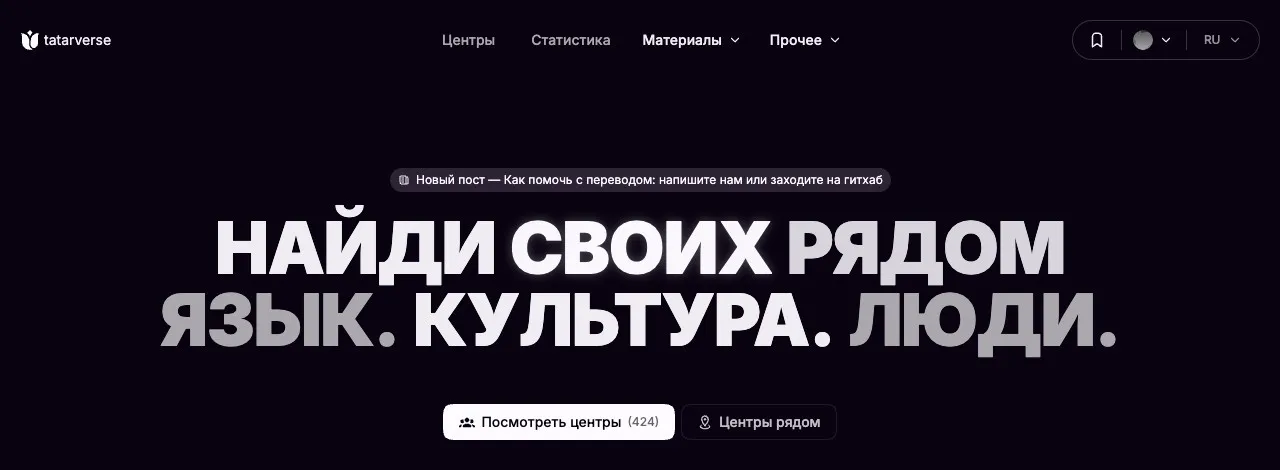
Of the 424 entries, 300 are Tatar, 98 Tatar-Bashkir, 16 Bashkir and 10 Crimean Tatar. 215 centres are abroad, 199 in Russia, and more than a dozen are online-only communities with no city attached. Search tolerates typos, there are filters by country, region and city with live counts, and geolocation for “centres nearby.” Saving a card to bookmarks needs no account: the list lives in the browser. There is a PDF export of the catalogue for printing, and three themes, light, dark and system.
One detail tatars.kz never had: the site talks to AI agents directly. A Cloudflare middleware function detects bots like ChatGPT, Claude and Gemini and serves them a markdown version of the page instead of HTML, so a model answering “where is the Tatar centre in Dubai” can build that answer straight from the catalogue’s data.
Technically the site is static: output: "static", Astro 7.2, Tailwind v4, no
UI framework and no host besides Cloudflare Pages.
A breakdown of the stack, the design system and real bugs
is a separate post.
What is still missing
I am keeping this list rather than hiding it, so as not to repeat tatars.kz’s mistake of unbounded promises. tatarverse.cc has no API for machine access, no in-site form to submit a centre, only a pull request or a direct message, and no admin panel for editing data. All three are a deliberate choice for now, not a forgotten task.
The data is open
Entries live in the repository as plain markdown files, each one carries its source, and anyone can fix a mistake without access to a database, because there is none. What is missing most right now is centre names in Latin America, the Middle East and Asia, plus reports of errors in entries that already exist.
I told the fuller version of this story, with the numbers as of publication,
in an article on vc.ru (in Russian).