I exported my bookmarks: 417 links, 356 domains, collected over several years.
Half of it turned out to be rubbish - one-off articles, hosting panels, forgotten
tabs. What follows is what survived the clean-up.
Every entry has a link, a line on what it is for, and a fact that makes it
interesting in its own right. I checked the numbers today rather than copying
them from someone else’s list. Every link is alive.
Colour
 realtimecolors.com - pick a palette and see it on a
finished landing page mock-up rather than on swatches.
Visualize your color palettes on a real website. pick a palette and see it on a finished landing page mock-up rather than on swatches.
It solves the core problem with colour generators: four pretty squares tell you
almost nothing about how text will read against a background. Here you look
straight at buttons, headings and small type.
 uicolors.app - turns one hex into a full 50 to 950
scale in Tailwind format.
Generate, edit, save and share Tailwind CSS color shades based on a given hexcode or HSL color. 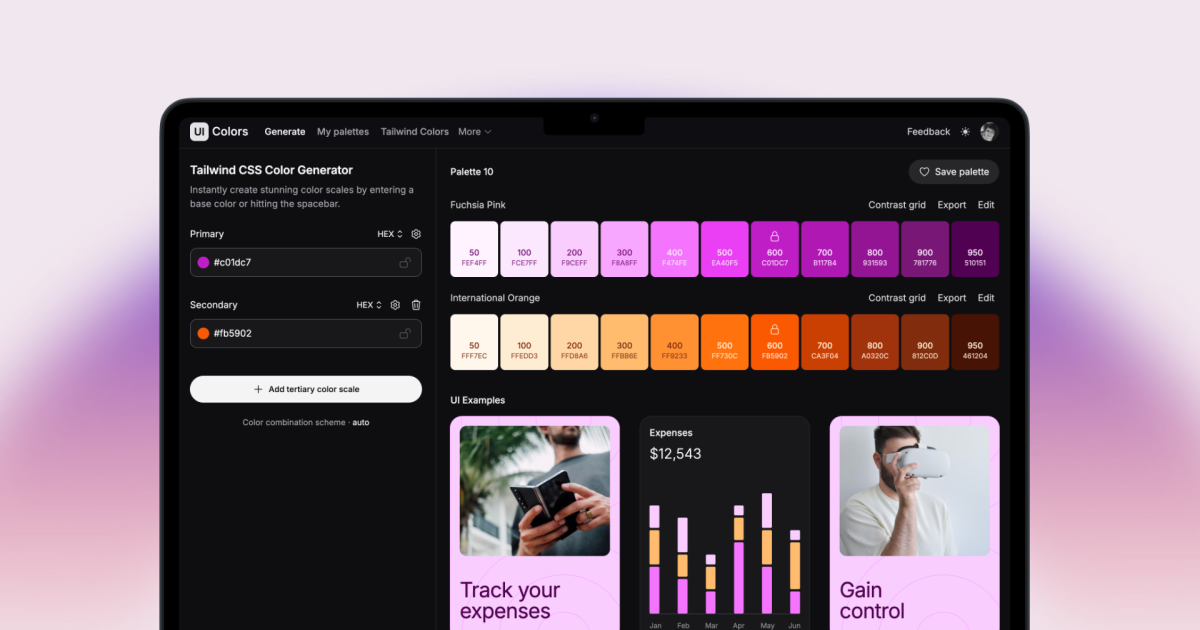
turns one hex into a full 50 to 950 scale in Tailwind format.
Exactly the format @theme expects in Tailwind v4: copy and paste. Building
that scale by hand takes half an hour and still comes out uneven.
 hypercolor.dev - ready-made gradients as Tailwind
classes.
A curated collection of beautiful Tailwind CSS gradients using the full range of Tailwind CSS colors. Easily copy and paste the class names, CSS or even save the gradients as an image. 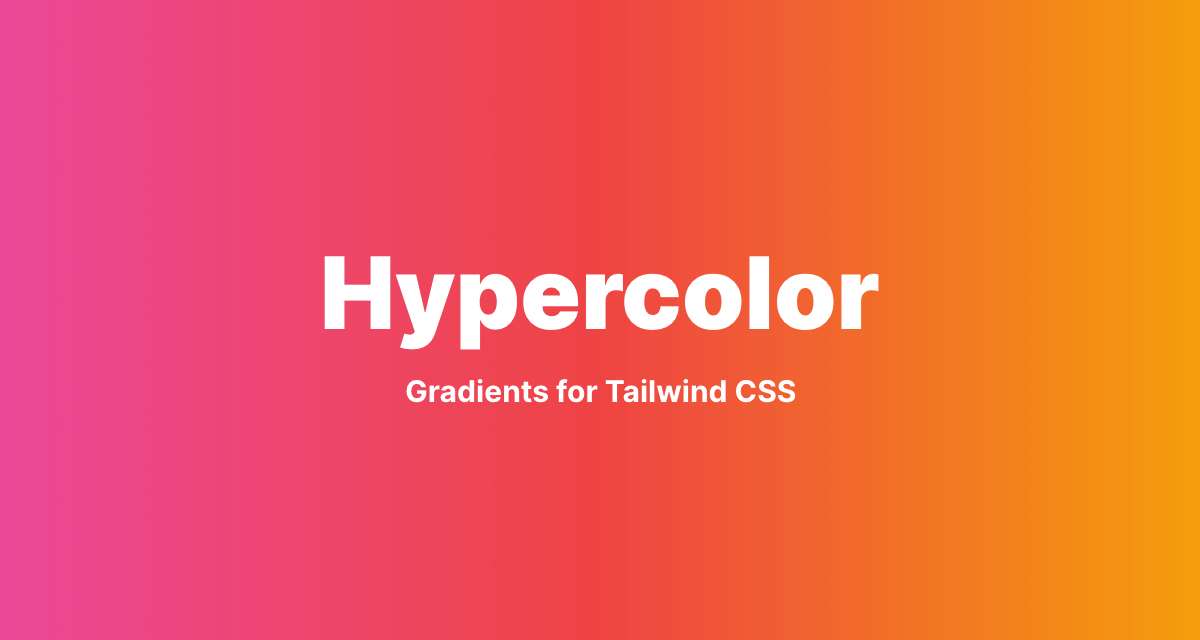
ready-made gradients as Tailwind classes.
 grainient.supply - over a thousand gradients with
grain.
Grainient offers 1000+ awesome gradients, animated gradients, grainy textures, and AI-generated backgrounds. Subscribe for unlimited downloads and elevate your designs with our premium collections. 
over a thousand gradients with grain.
The grain is not decoration but a technique: a clean gradient across a large
block bands because of limited bits per channel, and noise hides it. Apple uses
the same trick in macOS backgrounds.
 fffuel.co - SVG generators: waves, grids, blobs, noise.
A fun collection of free SVG generators for gradients, patterns, shapes, textures & cool backgrounds. Plus, some more color tools for web designers. SVG generators: waves, grids, blobs, noise.
A dozen and a half separate tools on one domain, all exporting clean SVG with
no dependencies.
 colorhunt.co - ready-made palettes you can scan quickly.
Discover the newest hand-picked color palettes of Color Hunt. Get color inspiration for your design and art projects. 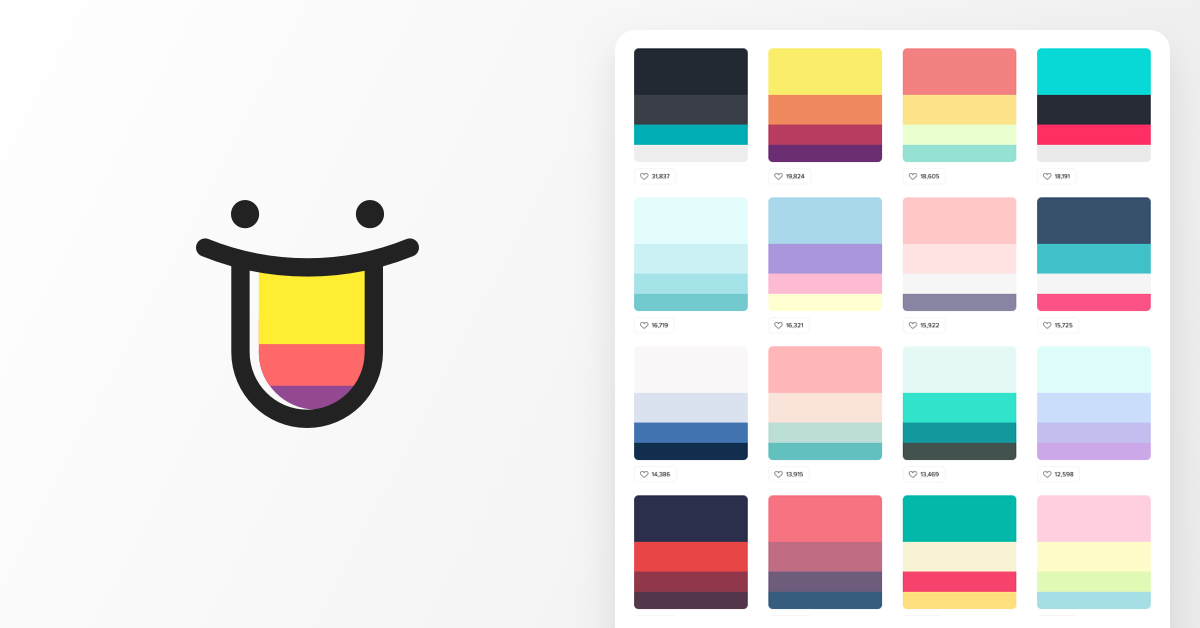
ready-made palettes you can scan quickly.
 coolors.co - palette generation, trends and export in
different formats.
Generate or browse beautiful color combinations for your designs. 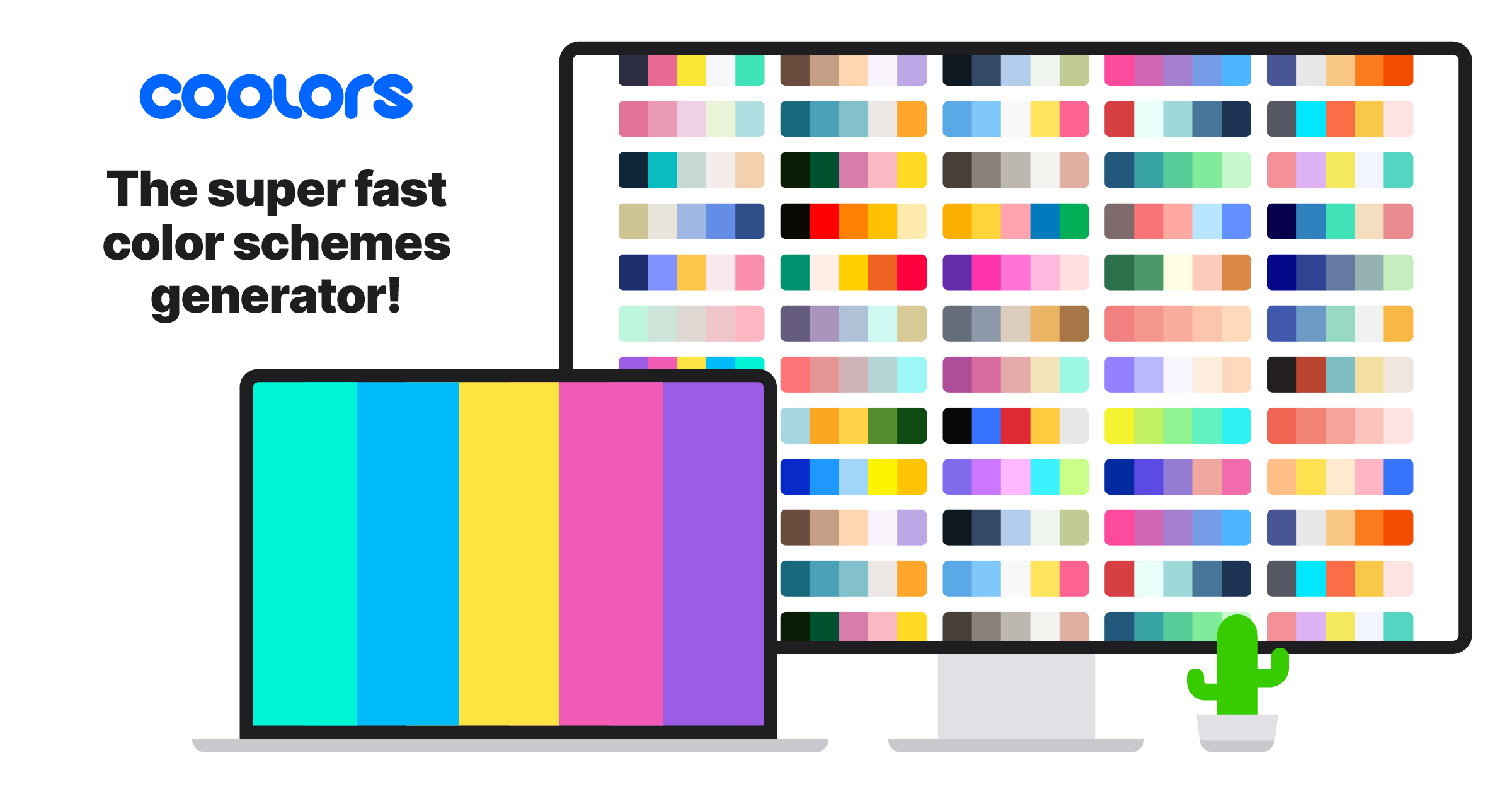
palette generation, trends and export in different formats.
 colorsandfonts.com - collections of colours,
fonts and ready pairings for interfaces.
Free color tools for designers and developers: curated color palettes, copy-paste CSS gradients, a palette builder with contrast checking, monochromatic shade generator, mesh gradients, animated shaders, and shadcn/Tailwind theme export. 
collections of colours, fonts and ready pairings for interfaces.
 meshgradient.in - a mesh-gradient generator with PNG
export.
Generate & customizse beautiful and colorful mesh gradients. Download Mesh Gradients & Export in PNG 
a mesh-gradient generator with PNG export.
Icons and graphics
 icones.js.org - search across every Iconify set at once.
search across every Iconify set at once.
I checked through their API today: 236 sets and 334,616 icons in a single
search. It hands you SVG, JSX or a name for astro-icon in one click.
 simpleicons.org - brand logos in a single colour.
brand logos in a single colour.
3,400 icons under CC0, so you can use them anywhere without attribution. Each
carries its official brand colour, which saves you eyedropping someone’s site.
 svgl.app - company logos in SVG, with dark variants.
A beautiful library with SVG logos 
company logos in SVG, with dark variants.
The dark variants are what make it more useful than the alternatives: on a dark
background an ordinary logo often collapses into a black blob.
 tabler.io - six thousand icons from one set.
Tabler Icons: 6184 free and open source SVG icons. Customizable size, color and stroke. Available for React, SolidJS, Vue, Figma and more for free! 
six thousand icons from one set.
6,150 of them, all drawn with a 2px stroke on a 24 by 24 grid. When the whole
interface comes from one set it looks assembled rather than glued together.
 thiings.co - a collection of 3D objects in one style.
A growing collection of 10000+ icons, generated with AI. Perfect for designers and creative projects. 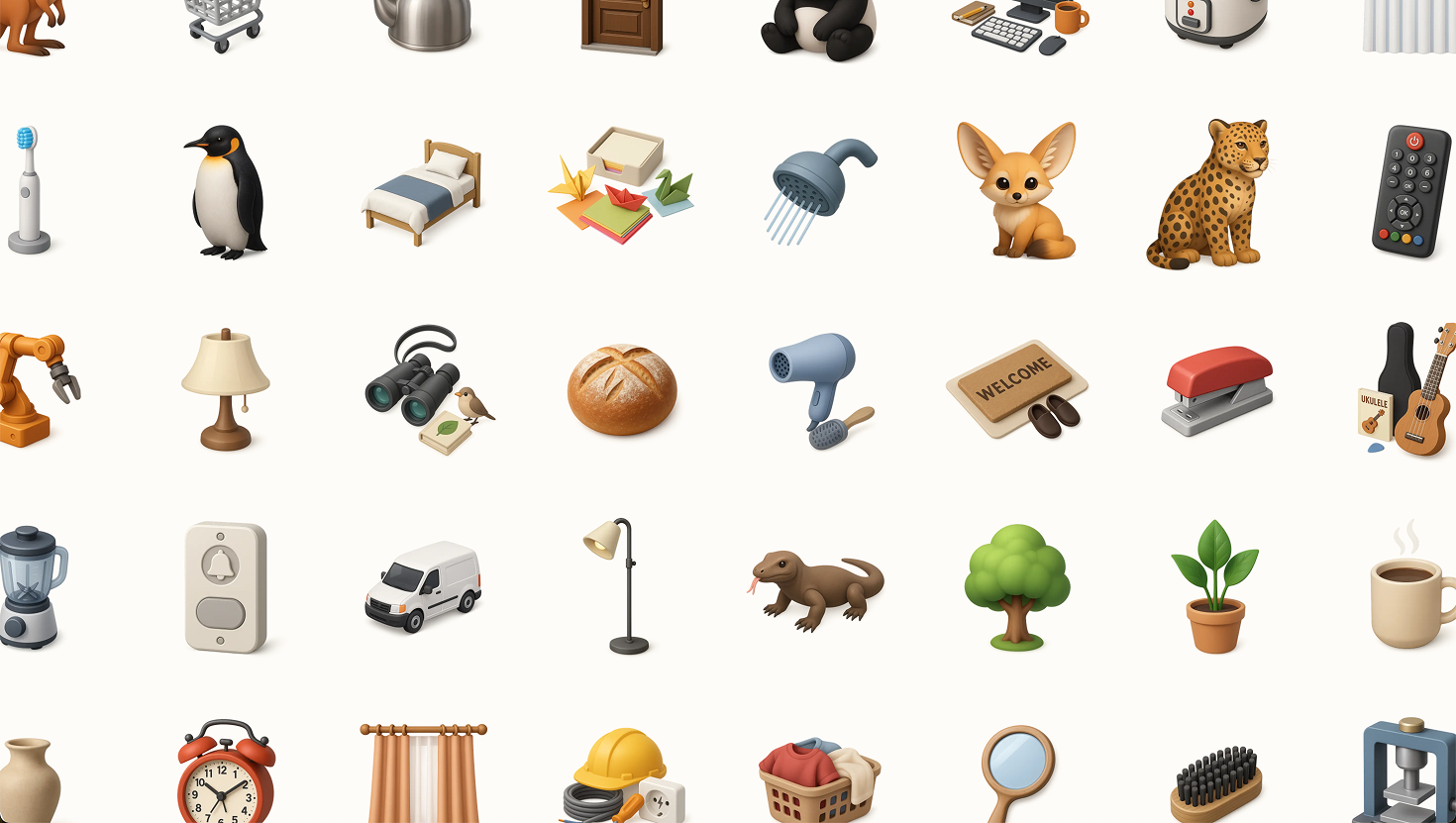
a collection of 3D objects in one style.
 undraw.co - illustrations with a swappable accent colour.
Open-source illustrations for any idea you can imagine and create. Build beautiful websites, products and applications with your color, for free. 
illustrations with a swappable accent colour.
Change the hex on the site and every illustration recolours to your brand
before you download it. The licence allows commercial use without attribution.
 developer.apple.com/sf-symbols -
Apple’s native system icon set.
SF Symbols is a library of thousands of symbols designed to integrate seamlessly with San Francisco, the system font for Apple platforms. 
Apple's native system icon set.
 iosicongallery.com - a gallery of iOS app
icons.
Showcasing beautiful icon designs from the iOS App Store a gallery of iOS app icons.
 macosicons.com - a large collection of macOS icons.
The largest collection of free macOS app icons. Download .icns and PNG icons for your Mac and iOS devices. 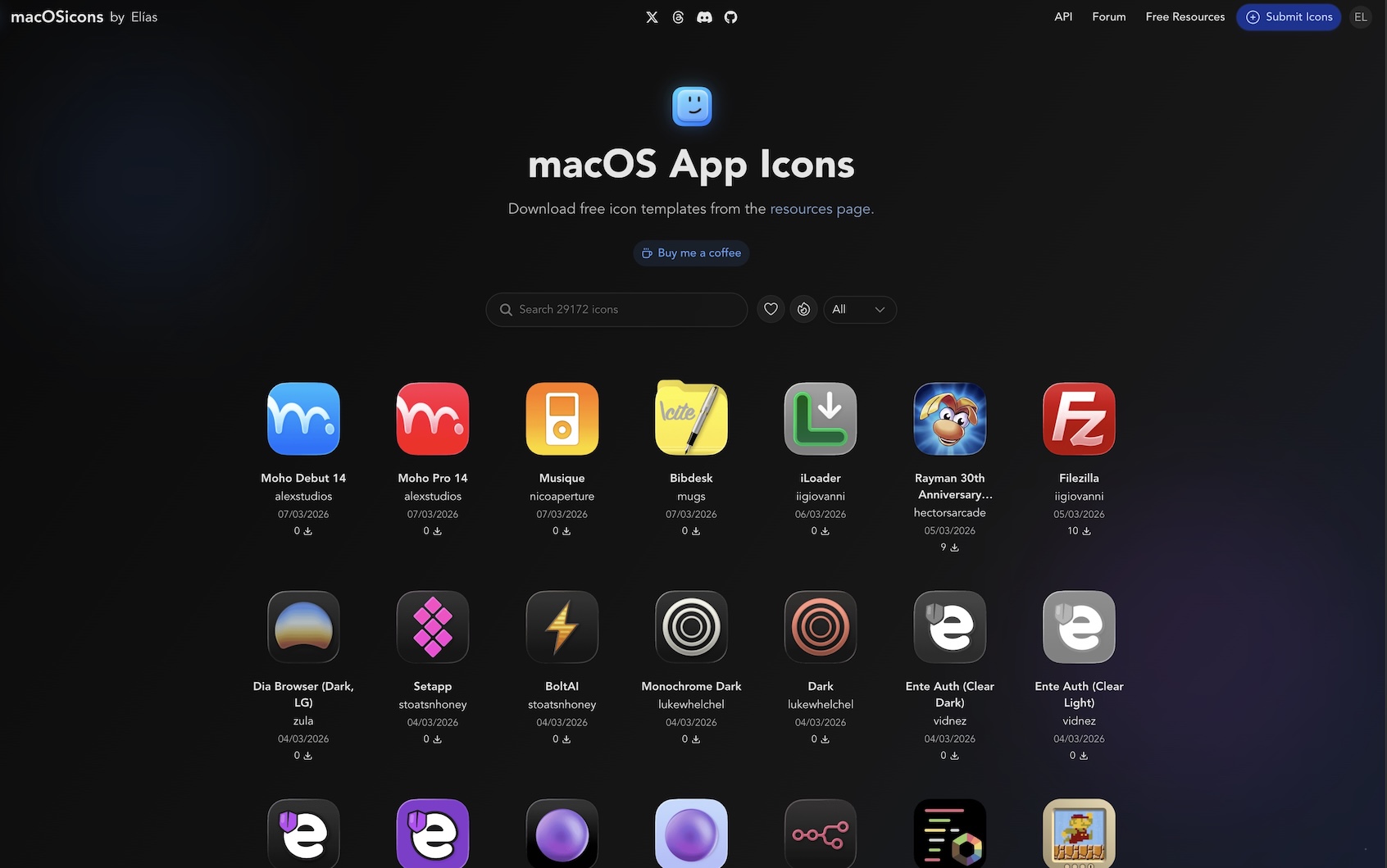
a large collection of macOS icons.
Where to look when nothing comes
 godly.website - a strictly curated collection of sites.
The best design inspiration on the Internet. 
a strictly curated collection of sites.
It differs from Awwwards in having no nominations and no voting. One person
with taste collects what they consider good.
 minimal.gallery - the same, leaning minimal.
Hand-picked design inspiration, curated daily 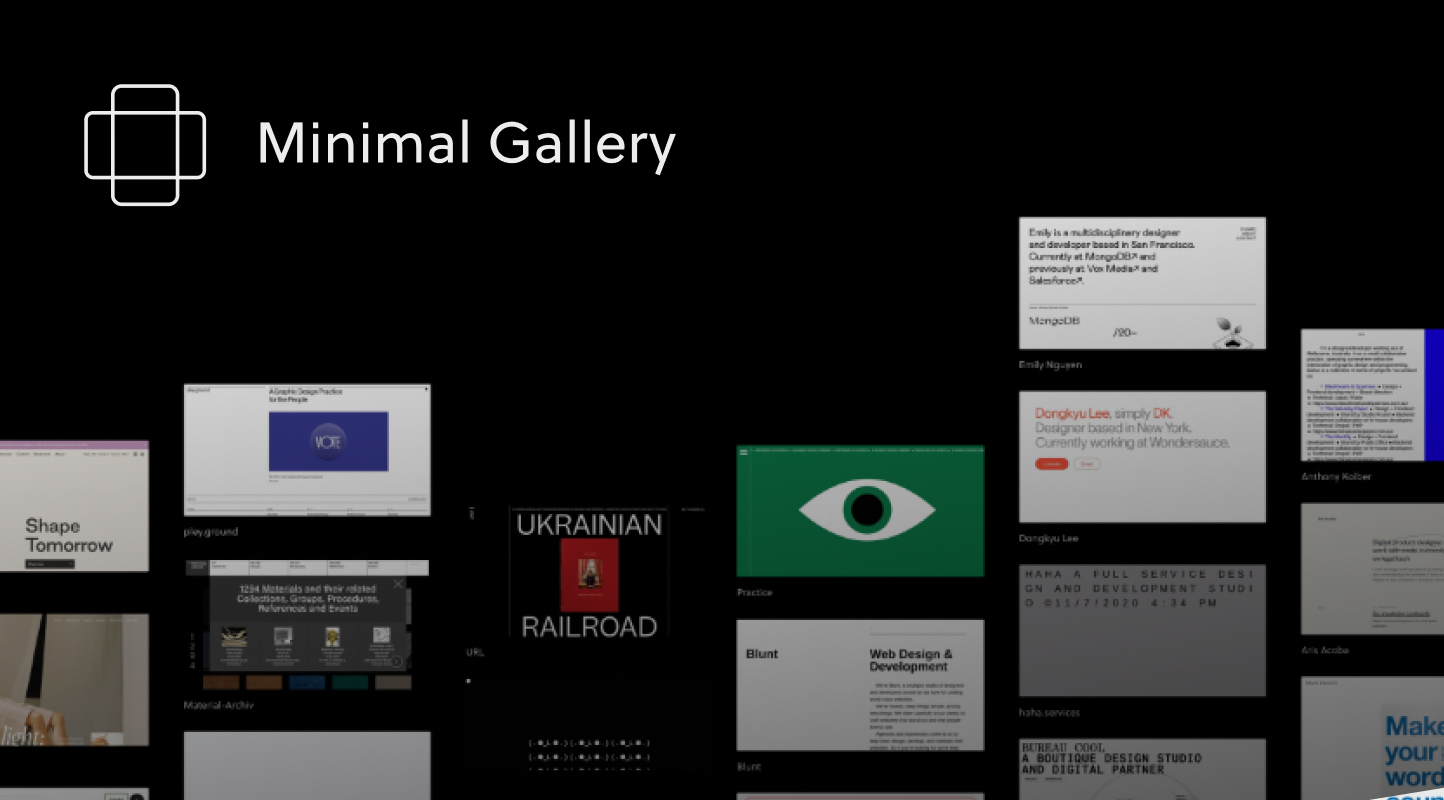
the same, leaning minimal.
 refero.design - references by element rather than by
whole site.
The largest collection of UI/UX references and design inspiration for web and iOS. Explore tens of thousands of screenshots with advanced search capabilities 
references by element rather than by whole site.
You search for “how an empty state looks” or “where search lives”, not “a
pretty landing page”. It saves time when the question is narrow.
 mobbin.com - the same for mobile apps.
Save hours of UI & UX research with our library of 400,000+ fully searchable mobile & web app screenshots. 
the same for mobile apps.
Screenshots are arranged by flow: not one screen but the whole chain from
sign-up to payment. You can see how many steps competitors take.
 darkmodedesign.com - dark interfaces only.
Dark Mode Design is a showcase of beautifully designed and inspiring dark mode websites. Dim the lights, lower your screen brightness, and enjoy. 
Useful because dark themes break differently from light ones: shadows stop
working and borders have to be built out of lightness instead.
 cofolios.com - portfolios of designers at large
companies.
Portfolios of designers from top tech companies. portfolios of designers at large companies.
 wallofportfolios.in - another wall of
portfolios, useful specifically for building taste.
Wall of Portfolios showcases the best design portfolios from UX, UI, and product designers. Explore top portfolios of the month, featuring creative and innovative designs, including dark-themed, minimal, animated/motion, and bento grid styles. Get inspired by the exceptional work of designers worldwide and find the perfect portfolio to spark your creativity. - made by Praneeth Jonnala 
another wall of portfolios, useful specifically for building taste.
 portfolioproject.io - a curated collection of
portfolios from designers and creative people.
Portfolio Project is dedicated to providing a curated list of the most visually stunning portfolios. Whether you're a designer, developer, or just seeking inspiration, our list is updated frequently enough to stay ahead. 
a curated collection of portfolios from designers and creative people.
 clay.global - an agency site worth studying as an example
of expensive case-study presentation.
Clay is a global UI/UX design and branding firm headquartered in San Francisco. We create digital products, websites, design systems, and brand identities across industries, with deep experience in B2B, SaaS, AI, and fintech. 
an agency site worth studying as an example of expensive case-study presentation.
 nicolasloureiro.com - an interactive
designer’s portfolio with strong motion work.
Nicolas Loureiro's selected works. Paris based art director and interactive designer. 
an interactive designer's portfolio with strong motion work.
 rohid.dev - a personal site where frontend and visual
presentation carry equal weight.
Hi, I’m Rohid, a senior full-stack developer from Bangladesh with 5+ years shipping production web, mobile, and desktop apps end-to-end with React, React Native, and TypeScript. Currently building StoreSway, an AI screenshot maker for App Store and Play Store apps. 
a personal site where frontend and visual presentation carry equal weight.
Component libraries
 heroui.com - the former NextUI, third version.
Beautiful, accessible React UI components built on React Aria and Tailwind CSS v4. The modern alternative to MUI, Chakra UI, and shadcn/ui for building production-ready applications. 
the former NextUI, third version.
The only mainstream one that takes surface layers and border tokens seriously:
they are derived by mixing the background with the foreground rather than
written by hand. A border therefore cannot go invisible on a new theme.
 ui.shadcn.com - the de facto standard for React.
Composable, accessible components with thoughtful defaults. Build your own component library with code you can customize, extend, and make your own. 
the de facto standard for React.
Formally it is not a library at all: components are not installed as a package
but copied as source into your project. That is why you can edit them and why
updates break nothing.
 21st.dev - a catalogue of components by design engineers.
12,000+ hand-crafted React and Tailwind CSS components, templates, and shadcn themes by real design engineers. Preview live, install with one command — for you and your AI agent. 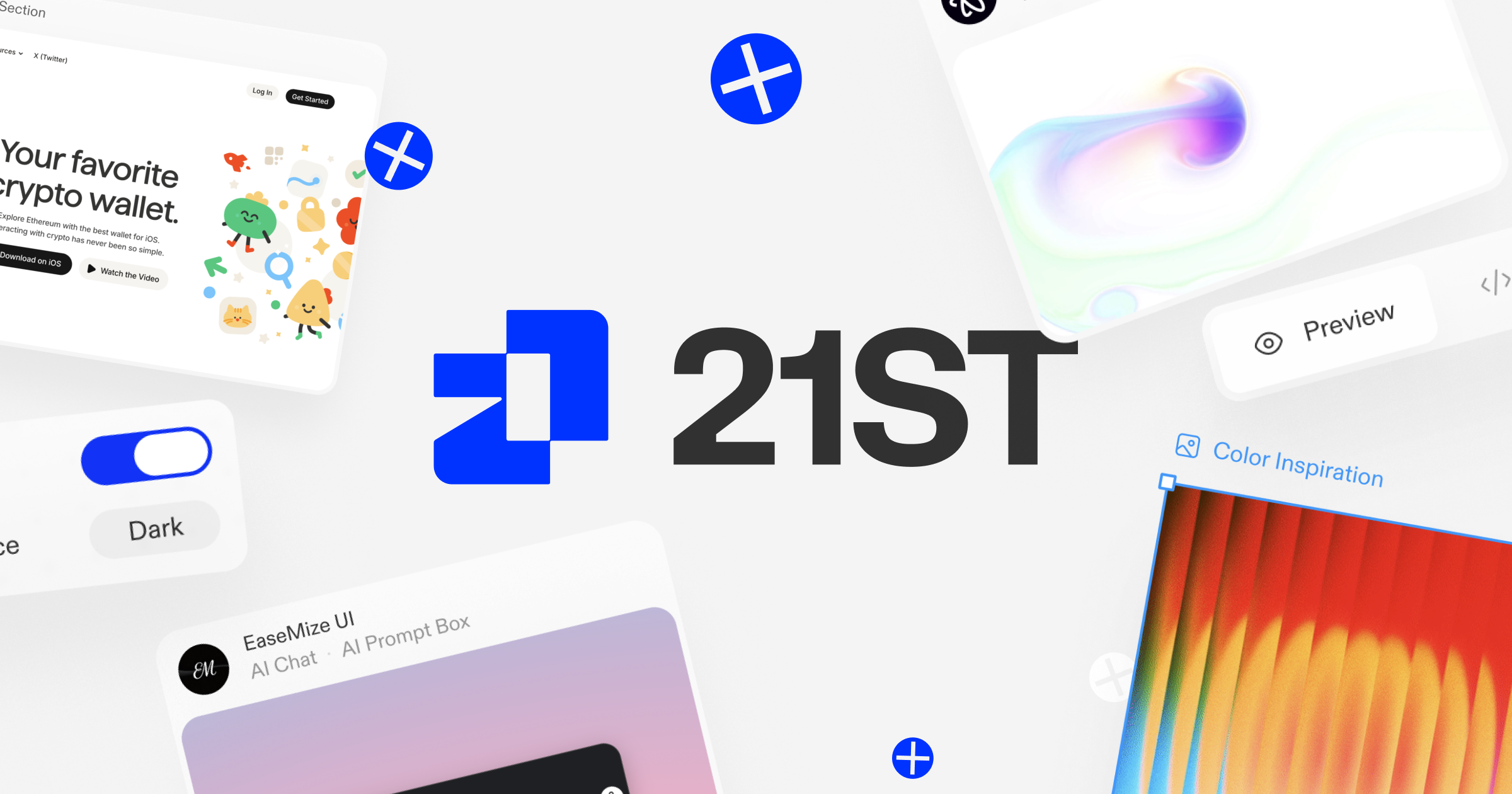
a catalogue of components by design engineers.
 magicui.design - animated blocks.
Beautiful UI components and templates to make your landing page look stunning. 
Take them one at a time. A site assembled entirely from these looks like a
thousand other landing pages: the effects are too recognisable.
 uiverse.io - buttons and loaders from the community.
buttons and loaders from the community.
 preline.co - a large set of Tailwind blocks.
Build faster with Preline UI, a free and open-source Tailwind CSS UI component library with Pro blocks, templates, plugins, framework guides, and Figma. 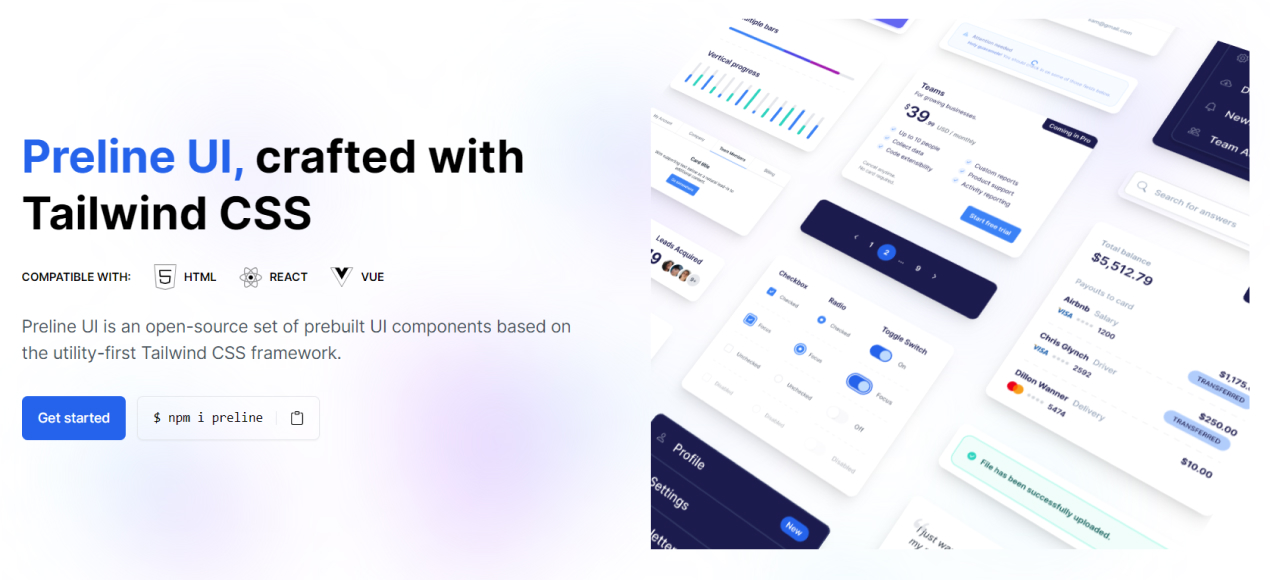
a large set of Tailwind blocks.
 motion-primitives.com - small React primitives
for interface animation.
small React primitives for interface animation.
 animata.design - ready-made animated components with
code.
Ship stunning UI faster with Ship stunning UI faster with ready-made React components.. Browse hundreds of copy-paste React animations built with Tailwind CSS for Next.js — MIT licensed, theme-aware, and production-ready. 
ready-made animated components with code.
 ui.lukacho.com - components, charts and animations in
one visual style.
Animated UI component Collection made with Next.js | TailwindCSS | Framer Motion 
components, charts and animations in one visual style.
 hyperui.dev - free Tailwind CSS v4 components.
Free, open-source Tailwind CSS components for modern web development. Copy-paste ready components to build beautiful, responsive websites faster. 
free Tailwind CSS v4 components.
 merakiui.com - Tailwind components with many
practical blocks.
Free Tailwind CSS Alert, Heroes, features, sign up forms, CTA, and everything you need to build your websites fast with RTL Languages Support. 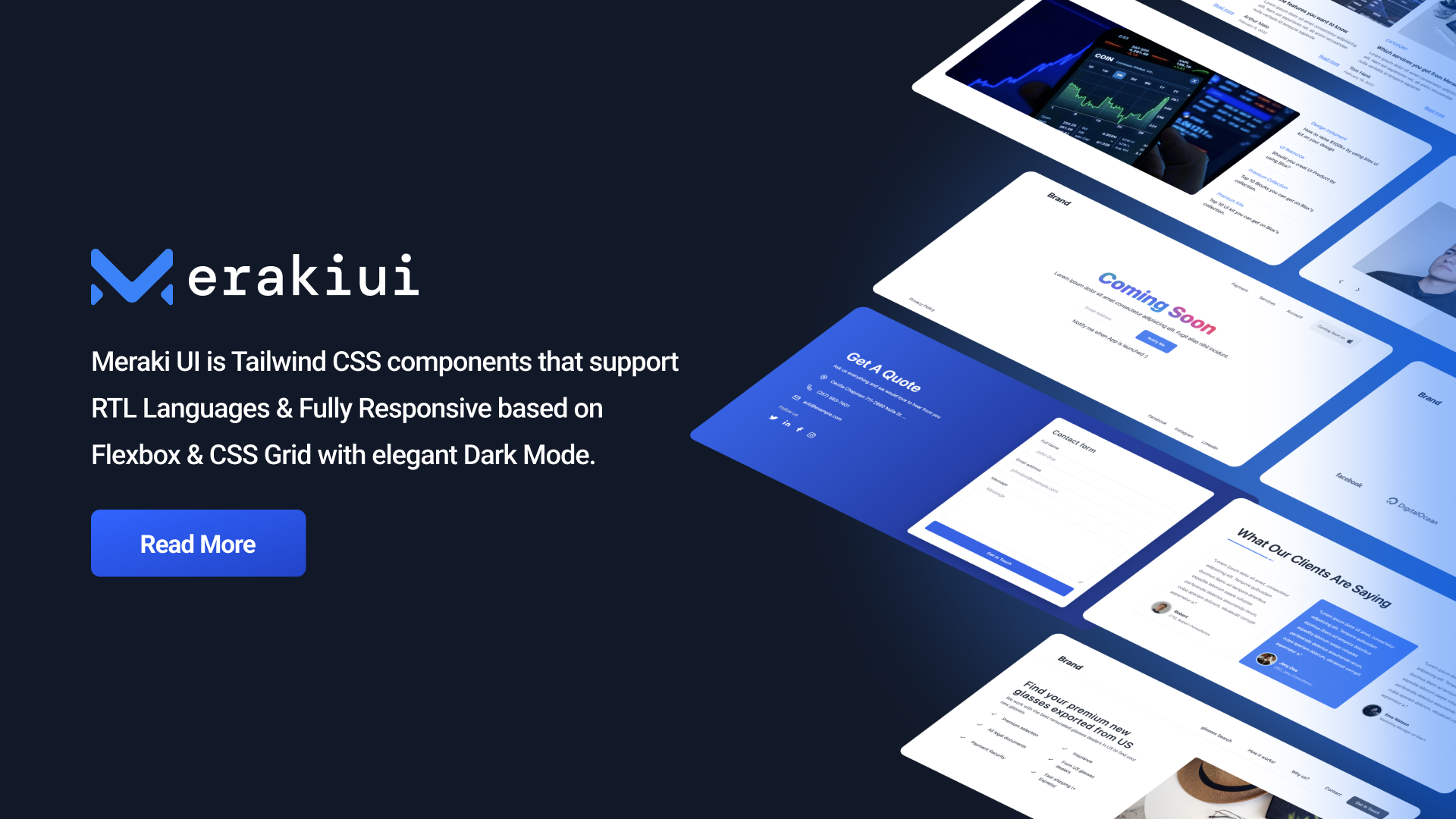
Tailwind components with many practical blocks.
 pagedone.io - a Figma design system and Tailwind blocks.
Largest open-source library of interactive Tailwind CSS Components and ready-made Tailwind Blocks. 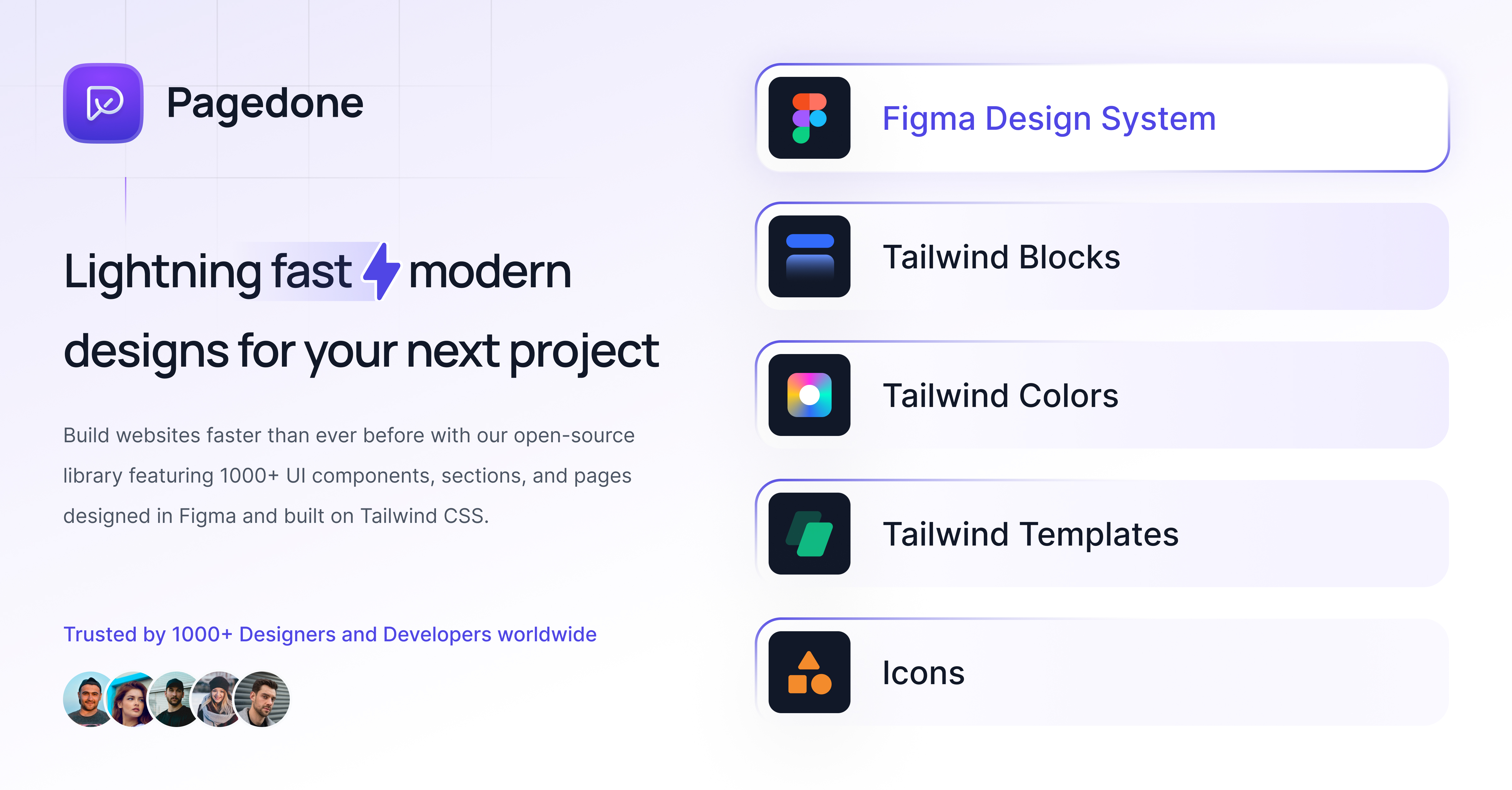
a Figma design system and Tailwind blocks.
 reui.io - blocks and components around shadcn/ui.
Free Shadcn UI components and pro blocks for React and Tailwind CSS. Hand-crafted icons, templates, and a hosted MCP server so coding agents build with the shadcn CLI. 
blocks and components around shadcn/ui.
 shadcnblocks.com - ready-made sections for
shadcn/ui projects.
Discover hundreds of extra shadcn/ui blocks and Shadcn UI components. Shadcnblocks is a premium component library built with Shadcn UI, React & Tailwind. 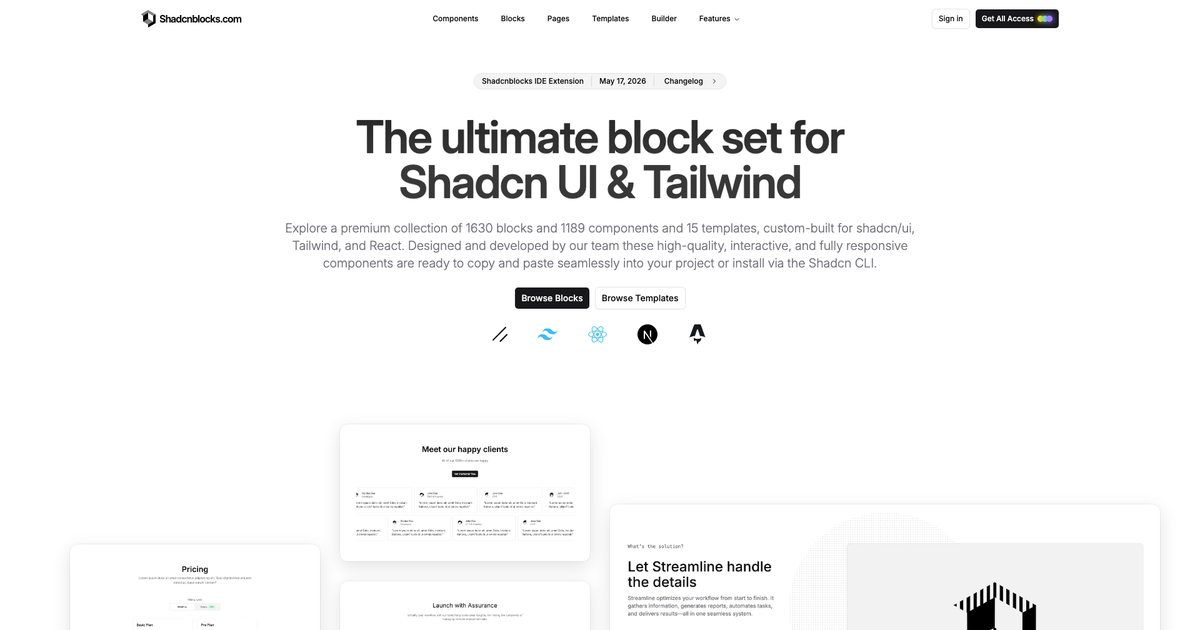
ready-made sections for shadcn/ui projects.
Small things that save time
 carbon.now.sh - an image from a chunk of code.
Carbon is the easiest way to create and share beautiful images of your source code. an image from a chunk of code.
 opengraph.xyz - shows how a link will unfurl in
Telegram, X and Slack.
shows how a link will unfurl in Telegram, X and Slack.
Before publishing rather than after. It is separately useful for showing
several networks side by side: they want different image proportions.
 favicon.io - favicons from text, an image or an emoji.
The best free favicon generator for your next project. Create a favicon.ico from text, an image, SVG, or emoji and download a complete favicon package. 
favicons from text, an image or an emoji.
 shields.io - those README badges.
Concise, consistent, and legible badges 
The badges are dynamic: package version, bundle size and download counts pull
themselves and never go stale the way a hand-typed number does.
 readme.so - assemble a README from blocks.
Use readme.so's markdown editor and templates to easily create a ReadMe for your projects 
assemble a README from blocks.
 cobalt.tools - download video or audio from anywhere.
cobalt lets you save what you love without ads, tracking, paywalls or other nonsense. just paste the link and you're ready to rock! download video or audio from anywhere.
Open source, 42 thousand stars on GitHub, AGPL. It stores nothing: the file is
assembled on the fly and handed straight to you.
 shots.so - mock-ups: a screenshot inside a device, on a
background.
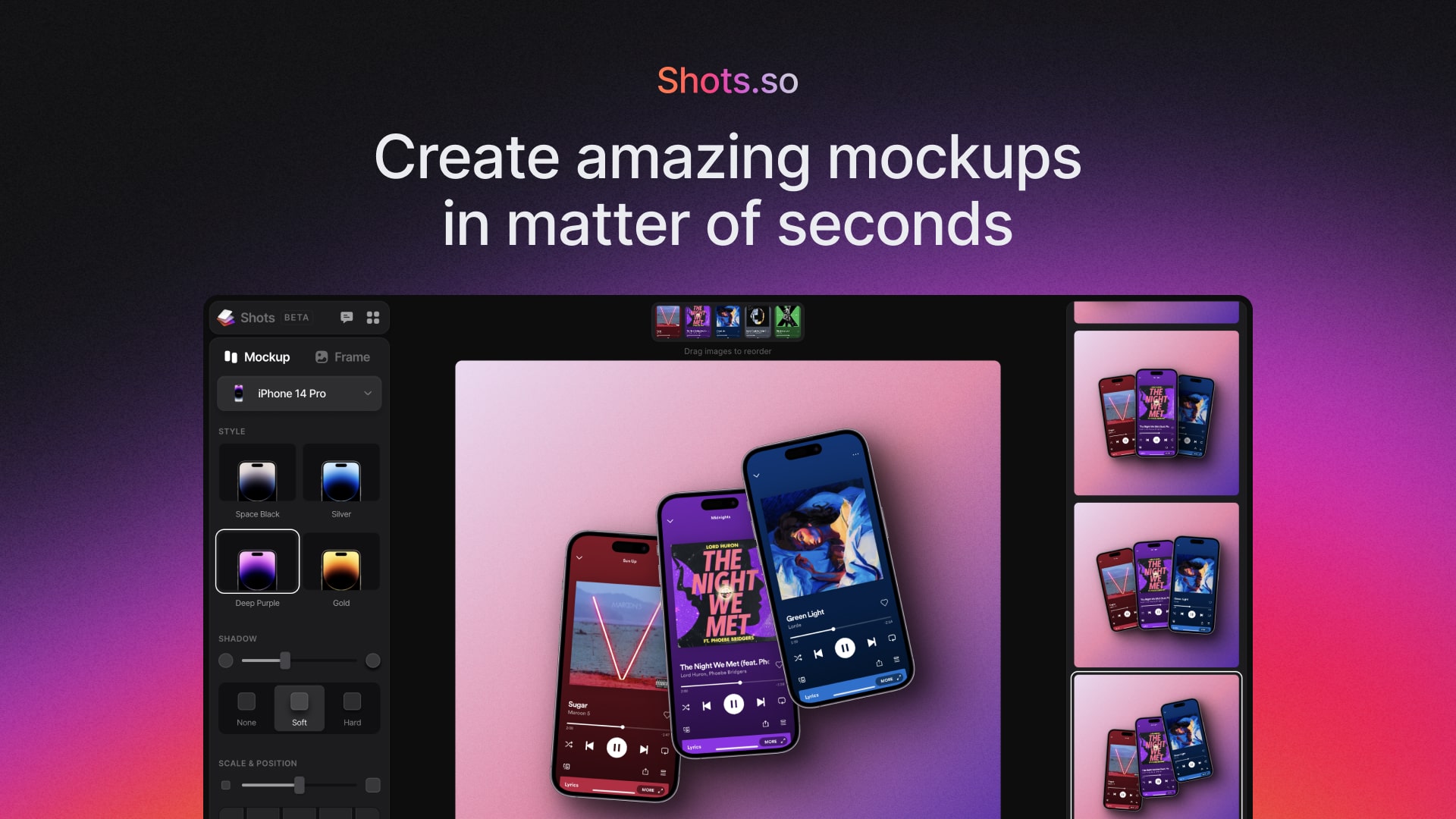
mock-ups: a screenshot inside a device, on a background.
 easing.dev - animation curves plotted side by side.
A curated collection of easing graphs 
animation curves plotted side by side.
Seeing them next to each other explains the difference between ease-out and
ease-in-out in a second, where documentation takes a paragraph.
 devdocs.io - documentation for dozens of languages in one
place.
Fast, offline, and free documentation browser for developers. Search 100+ docs in one web app including HTML, CSS, JavaScript, PHP, Ruby, Python, Go, C, C++, and many more. documentation for dozens of languages in one place.
It works offline: the doc sets download into the browser. Priceless on a plane
or a train, where you need documentation exactly when there is no network.
 time.fyi - small tools for time, dates and time zones.
Your calendar, meetings and to-dos in one app. Open source, MIT licensed, cross-platform desktop app. Coming soon. 
small tools for time, dates and time zones.
 smashing.tools - a set of quick web tools in one
place.
Curated best starter kits, UI components, design kits, AI & Dev tools 
a set of quick web tools in one place.
 toolfox.ru - a simple QR generator for
links and text.
Создание QR-кодов для любых данных ✓ Ссылки, текст, WiFi ✓ Высокое качество ✓ Скачивание в PNG, SVG ✓ Настройка размера и цвета 
a simple QR generator for links and text.
 html2astro.mb-js.site - convert HTML into an
Astro project.
Drag & drop your HTML. Instantly convert to an Astro project. convert HTML into an Astro project.
 story.to.design - move code into Figma components.
Generate and sync full Figma components from Storybook, Backlight or Histoire. Storybook to Figma. Histoire to Figma. 
move code into Figma components.
 animate-code.com - animated videos from code
snippets.
AnimateCode lets you create stunning keynote-inspired transitions for your code. 
animated videos from code snippets.
Technically beautiful
These are more interesting to open than to describe.
 shaders.paper.design - shader backgrounds with
zero dependencies.
Shaders for you to use in your projects, as React components or GLSL. 
shader backgrounds with zero dependencies.
It loads in a second and looks more expensive than half the sites that drag in
a heavy WebGL library for the same effect.
 unicorn.studio - a no-code editor for WebGL effects.
Design production-ready web components with shaders, media, 3D, and interactive motion in a visual canvas. 
a no-code editor for WebGL effects.
 rive.app - interactive animation with state machines.
Behind Spotify Wrapped, Duolingo, and products reaching 2 billion users. Design, animate, and code in one place. Ship everywhere. 
interactive animation with state machines.
Not video and not Lottie: the animation has a state machine and reacts to
input. The runtime is written in C++ and runs on the web, on mobile and in
games.
 haptics.lochie.me - haptic feedback on the mobile
web.
Haptic feedback for the mobile web. 
haptic feedback on the mobile web.
Open it on a phone or there is no point at all. It demonstrates something most
people do not know exists on the web.
 torph.lochie.me - dependency-free text morphing.
Dependency-free animated text component. 
dependency-free text morphing.
 dora.run - 3D animated sites without code.
3D animated sites without code.
 framer.com - a visual website builder loved by
designers.
Go from idea to launch with an agent that designs and builds on the canvas. Keep each change editable, with hosting, security, analytics, CMS, and SEO built in. 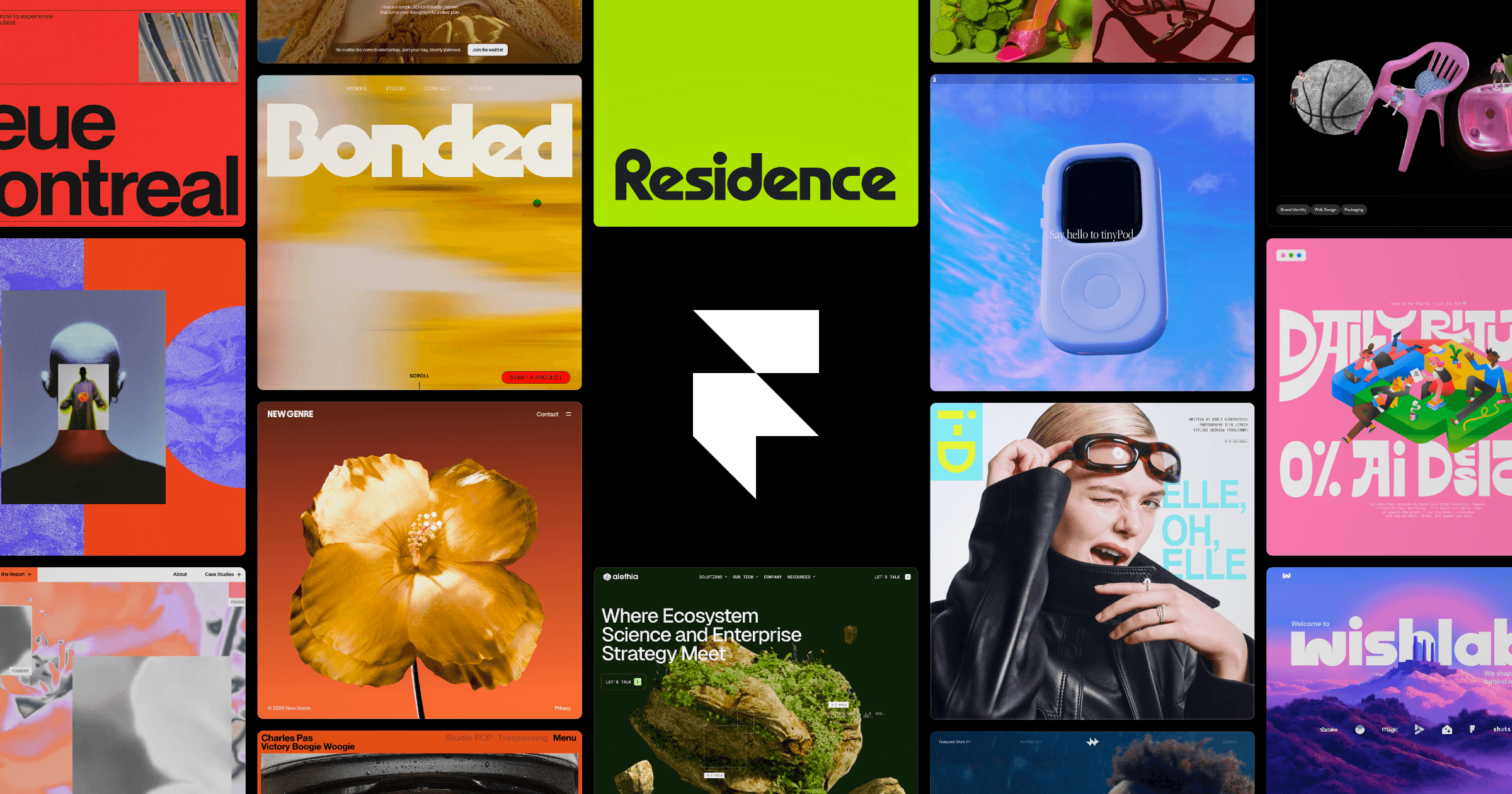
a visual website builder loved by designers.
 relume.io - a section library and quick start for
site structure.
Build from the human-made component system behind 2M+ websites. Publish and grow your site in Relume, or export to Webflow, Figma & React. Free to start. 
a section library and quick start for site structure.
 webflow.com - visual site building with proper publishing.
Design, build, optimize, and rank in AI search — all in Webflow. Enterprise-grade security, CMS, hosting, and AEO built in. Trusted by over 300k teams. 
visual site building with proper publishing.
 uvcanvas.com - ready-made
canvas backgrounds worth studying as a technique.
ready-made canvas backgrounds worth studying as a technique.
Products with exemplary interfaces
Nothing to download here, but worth staring at.
 linear.app - still the benchmark for speed and keyboard
navigation.
Purpose-built for planning and building products with AI agents. 
still the benchmark for speed and keyboard navigation.
Half of today’s issue trackers are an attempt to reproduce it. They also
publish the “Linear Method”: how they run development, not just how the
interface looks.
 family.co - a crypto wallet with the best animation in
fintech.
Your favorite crypto wallet. 
a crypto wallet with the best animation in fintech.
 raycast.com - a desktop app made with respect for detail.
A collection of powerful productivity tools all within an extendable launcher. 
a desktop app made with respect for detail.
 ghostty.org - a terminal whose documentation site is
itself exemplary.
Ghostty is a fast, feature-rich, and cross-platform terminal emulator that uses platform-native UI and GPU acceleration. 
a terminal whose documentation site is itself exemplary.
Written in Zig, 60 thousand stars on GitHub, and the key difference from its
rivals: a native interface on every platform instead of Electron. That is where
the speed comes from.
 cal.com - the open alternative to Calendly.
A fully customizable scheduling software for individuals, businesses taking calls and developers building scheduling platforms where users meet users. 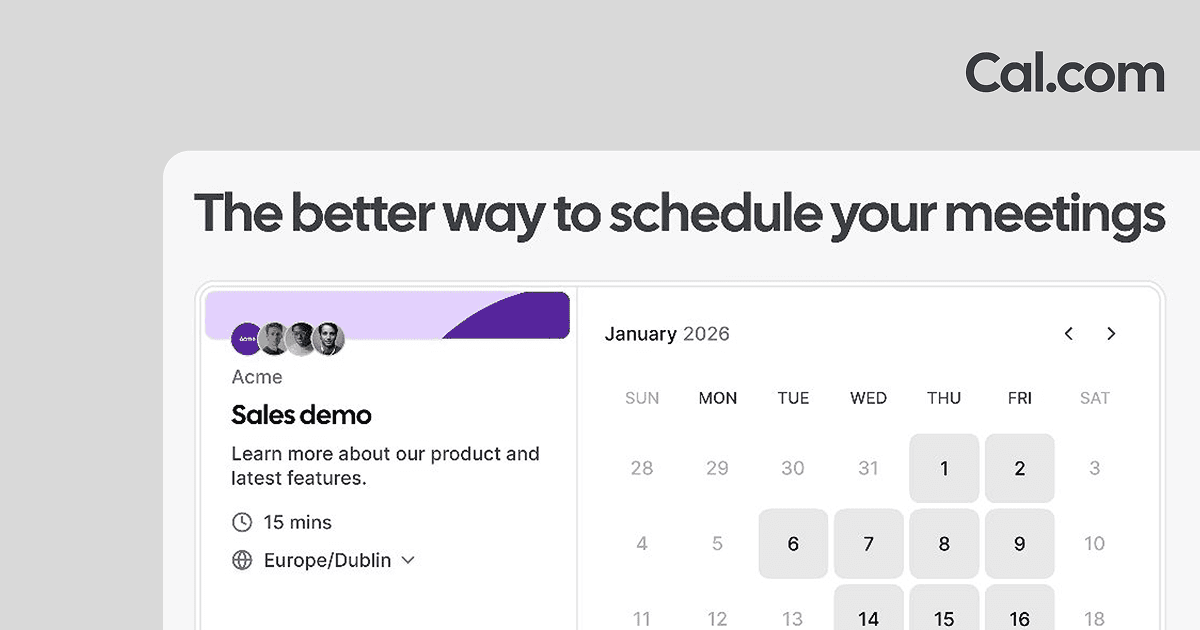
the open alternative to Calendly.
 plane.so - an open issue and project tracker.
Project management for teams and AI agents. Plan, track, and ship with Projects, Wiki, and AI. Available on cloud, self-hosted, and air-gapped. 
an open issue and project tracker.
 logsnag.com - event tracking with a pleasant product
interface.
LogSnag is a flexible event tracking tool that lets you stay on top of your product. 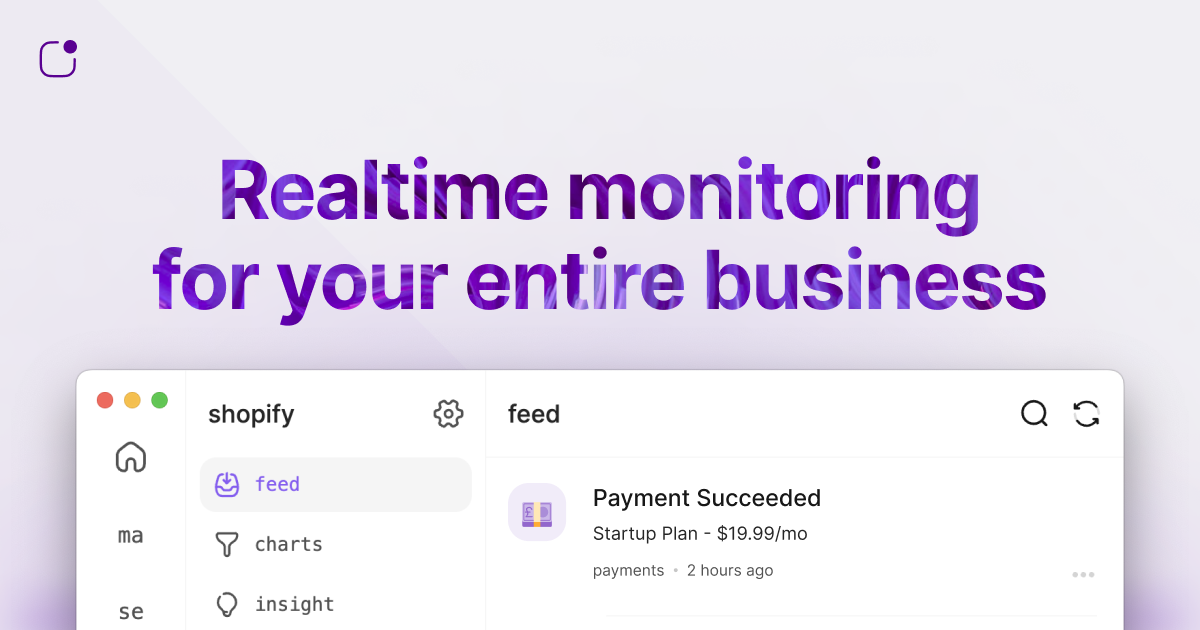
event tracking with a pleasant product interface.
 tally.so - forms that do not feel like an old form builder.
The simplest way to create beautiful, professional forms in seconds. Unlimited forms, unlimited submissions, forever free. Just start typing - no coding needed. 
forms that do not feel like an old form builder.
 notion.com - a workspace worth studying for interface
density.
Build Custom Agents, search across all your apps, and automate busywork. The AI workspace where teams get more done, faster. 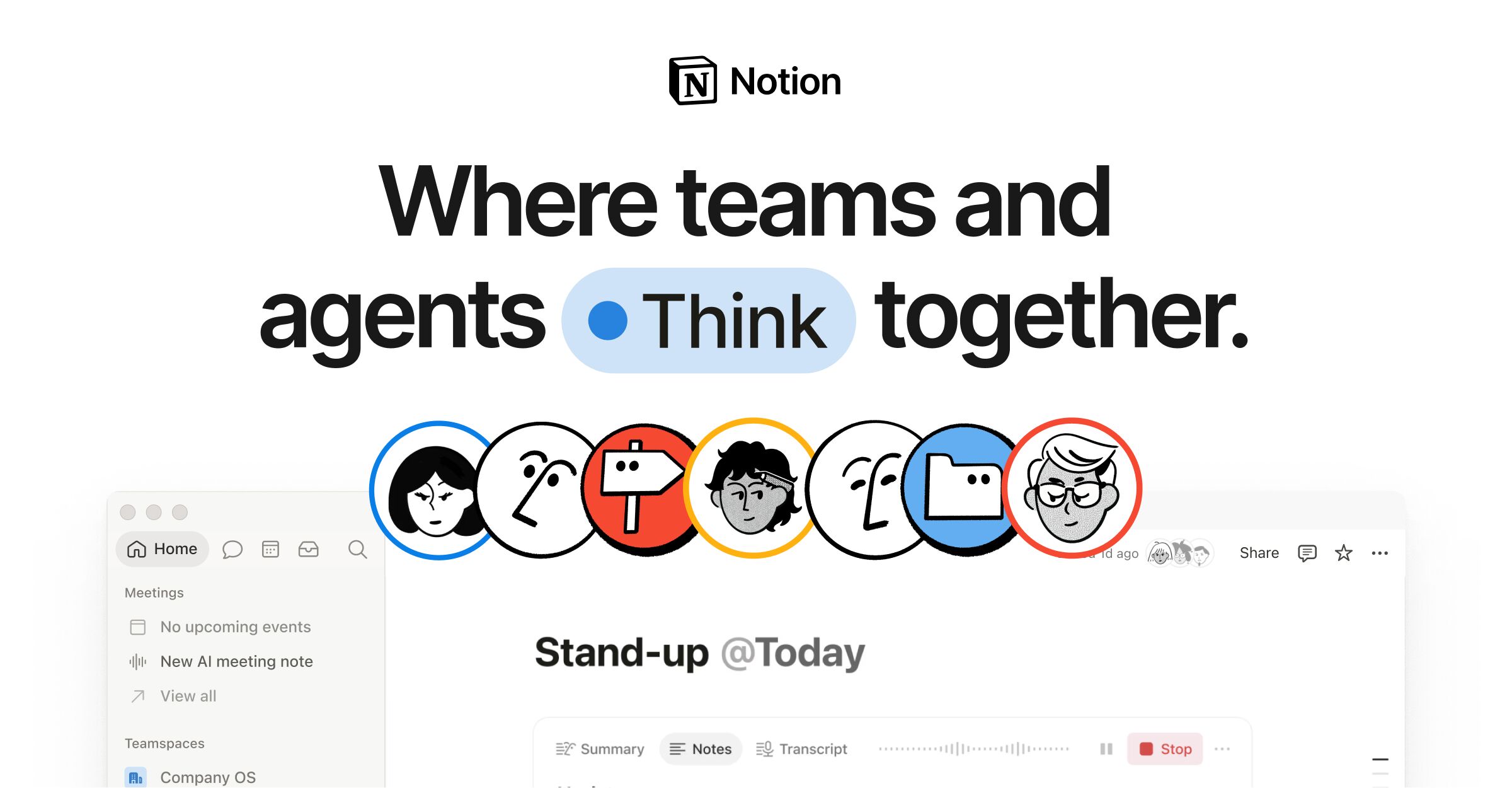
a workspace worth studying for interface density.
 dia.browser.com - a browser built around AI work
with tabs.
Dia is the browser for your best work. Get answers without having to ask, produce beautiful ready-to-share outputs, and stay focused in the best browser for your work day. 
a browser built around AI work with tabs.
If you build with Astro
 docs.astro.build - documentation you keep coming back
to.
documentation you keep coming back to.
Reading it beats googling recipes: half of the “strange” problems are described
there in plain words. Confirmed twice this week on my own work.
 ui.full.dev - components built for Astro rather than React
wrapped in Astro.
Fulldev UI ships ready-to-use Astro UI components, full-width blocks, and content primitives through a shadcn-compatible registry for source-first websites. components built for Astro rather than React wrapped in Astro.
 inox-tools.fryuni.dev - integrations that patch
gaps in the platform.
A collection of oxygen-free tools for Astronauts integrations that patch gaps in the platform.
 npmx.dev - an npm package browser.
a fast, modern browser for the npm registry. Search, browse, and explore packages with a modern interface. 
It shows weight, the dependency tree and file contents at once, without hopping
between npm, GitHub and bundlephobia.
 risingstars.js.org - what took off during the year.
A complete overview of the JavaScript landscape in 2025: trends about frontend, fullstack and Node.js frameworks, React and Vue.js ecosystems, build tools, state management... 
what took off during the year.
It counts growth over the year rather than absolute stars, so new projects come
out on top instead of perennial leaders like React.
 astroweekly.beehiiv.com - a weekly roundup of
Astro news.
Join 1000+ Astronauts who receive our weekly email roundup of insights, tools + resources from the Astro universe. 
a weekly roundup of Astro news.
 astro.build/themes - themes and starters from the
Astro catalogue.
Elevate your style with our stellar designs. 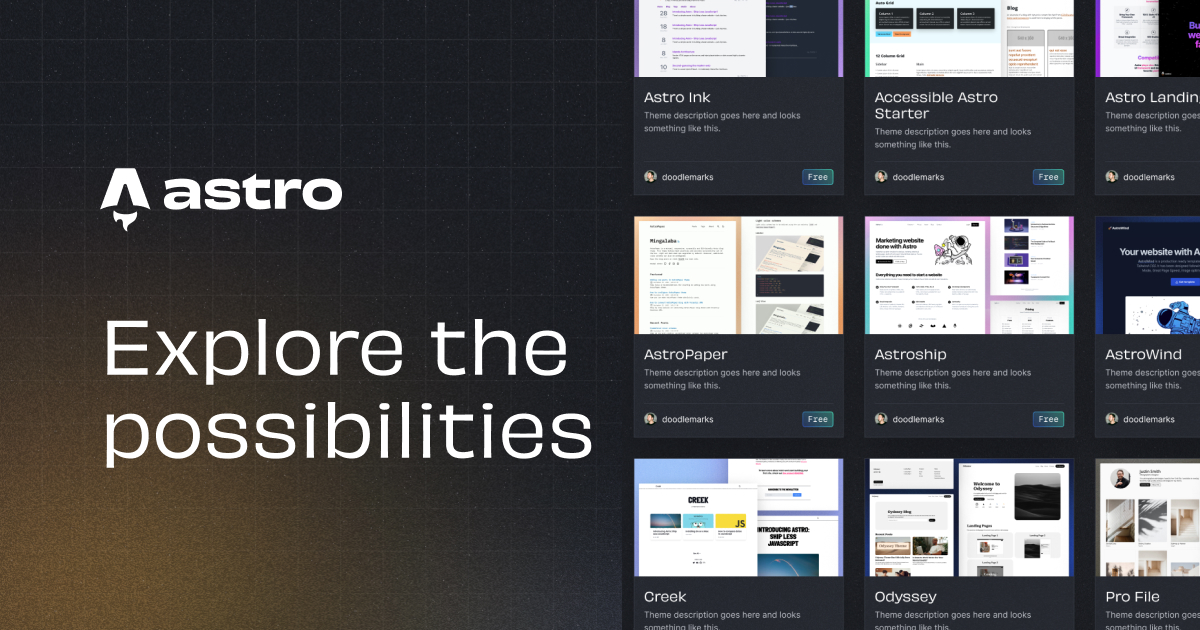
themes and starters from the Astro catalogue.
 writenex.com/astro - a visual editor for Astro
Content Collections.
WYSIWYG editor for Astro content collections. Zero config, auto-discovery, image upload, version history. a visual editor for Astro Content Collections.
 astroeditor.danny.is - a Markdown editor with
Astro collection schemas.
Astro Editor is a native, distraction-free markdown editor that reads your Astro content collection schemas and turns frontmatter into clean, schema-aware forms. For writer mode, not coder mode. 
a Markdown editor with Astro collection schemas.
 webcoreui.dev - Astro components with Svelte and React
support.
Customizable UI component library for Astro with Svelte and React support. 
Astro components with Svelte and React support.
 astro-consent-playground.vercel.app -
a cookie consent playground for Astro.
a cookie consent playground for Astro.
Comments and content for static sites
Relevant if you run a static site and want something alive on it.
 remark42.com - comments on your own server.
Remark42 is a self-hosted, lightweight, and simple (yet functional) comment engine, which doesn't spy on users. It can be embedded into blogs, articles or any other place where readers add comments. comments on your own server.
Written in Go, deploys as one container, tracks nobody. The author is Umputun,
host of the Radio-T podcast, and the code is noticeably tidier than average.
 cusdis.com - a lighter open alternative.
a lighter open alternative.
 pagescms.org - an admin panel for content that lives in
git.
Manage content and media right in your GitHub repository. No database, no API, no extra backend. 
an admin panel for content that lives in git.
One config file goes into the repository, the panel itself is hosted by them.
Nothing to deploy.
 keystatic.com - the same, with a TypeScript schema.
Content management for your codebase. 
the same, with a TypeScript schema.
An important detail for static sites: the admin panel needs a server runtime,
so a purely static site has to move to hybrid rendering for it.
 voidfull.com - light content management for static
sites.
Complete platform for your content. Manage your Blogs, Help center, Changelog, or any static content. 
light content management for static sites.
 sanity.io/templates/astro-sanity-clean -
a clean Astro + Sanity template.
Sanity is the back-end built for AI content operations. Power web, mobile, and agentic applications at scale. 
a clean Astro + Sanity template.
 zenblog.com - a small CMS for blogs.
Simple, headless, blogging CMS.
 hashnode.com - blogging and API docs for developers and
teams.
Start a blog on your own domain, keep your audience, and reach readers across search and AI engines. Free to start. 
blogging and API docs for developers and teams.
Automation and services
 make.com - visual automation scenarios between
services.
visual automation scenarios between services.
 pipedream.com - automation where APIs, code, databases
and AI live next to each other.
Managed auth and 10,000+ tools across 3,000+ APIs for the agents you’re building — and a secure gateway for the AI tools your company uses. automation where APIs, code, databases and AI live next to each other.
 zapier.com - the classic glue between services.
Build and scale AI workflows and agents across 9,000+ apps with Zapier—the most connected AI orchestration platform. Trusted by 3 million+ businesses. 
the classic glue between services.
 convex.dev - a fullstack TypeScript platform with a
reactive database.
All gas, no breakages. Convex is the reactive backend platform that keeps up with you and your agents. 
a fullstack TypeScript platform with a reactive database.
 medusajs.com - open building blocks for e-commerce.
The most flexible commerce platform for agents and developers. 
open building blocks for e-commerce.
 refine.dev - an open-source Retool alternative for
internal tools.
Build enterprise internal tools and B2B apps 10x faster with Refine agents. Experience the future of vibe coding and AI-led development. 
an open-source Retool alternative for internal tools.
 loops.so - an email platform for SaaS.
Loops is email marketing software for SaaS teams to send marketing, lifecycle, and transactional email from one product. Free to start. 
an email platform for SaaS.
 serpapi.com - an API for Google and other search results.
SerpApi is a real-time API to access Google search results. We handle proxies, solve captchas, and parse all rich structured data for you. 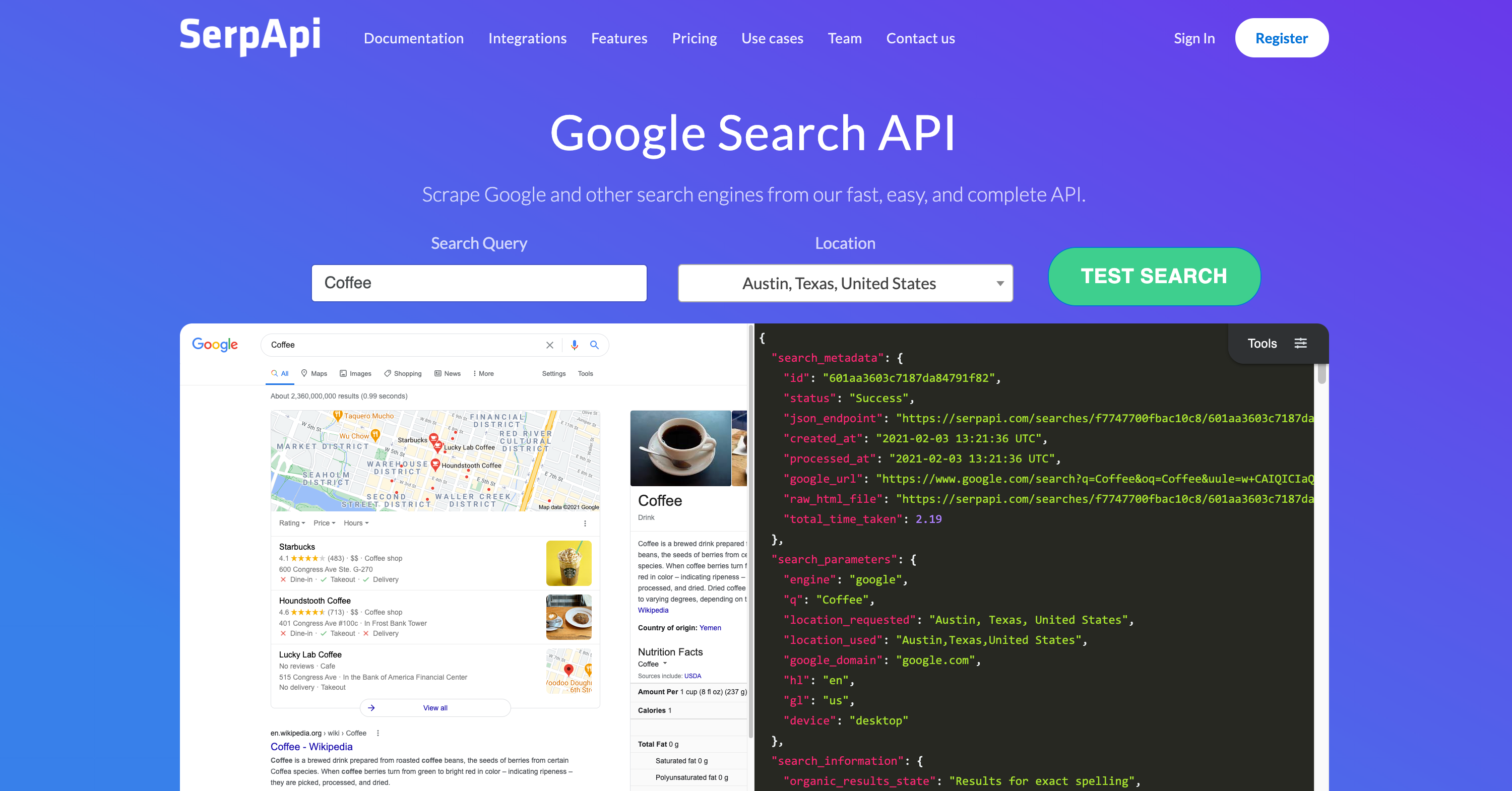
an API for Google and other search results.
Simply pleasant
 asoftmurmur.com - background sounds of rain and wind.
Mix ambient sounds together to wash away distraction and help you focus or relax background sounds of rain and wind.
A mixer with several tracks: blend rain with distant thunder and mute the
birds. It beats “focus” playlists because there is no melody for attention to
latch onto.
 thanks.dev - donations to library authors.
We're passionate about making open source sustainable. Scan your dependancy tree to better understand which open source projects need funding the most. Maintainers can also register their projects to become eligible for funding. donations to library authors.
It walks your repository’s dependency graph and splits an amount across the
people whose code you actually use, transitive packages you never heard of
included.
 notbyai.fyi - a “made by a human” badge.
Download and add the Not By AI badge to showcase your AI-free & human-first approach to content creation (writings, art, photos, paintings, videos, and music) 
a "made by a human" badge.
 symbl.cc - emoji and Unicode characters with decent search.
Explore symbols, characters, hieroglyphs, scripts, and alphabets on SYMBL (◕‿◕). Find and copy 😎 Emojis, ❤ hearts, → arrows, ★ stars. Complete Unicode table, interesting facts, and technical information 
emoji and Unicode characters with decent search.
The general observation from the clean-up: out of 417 bookmarks I regularly open
about twenty. The rest is either “might come in handy one day” that never came,
or a task solved some other way. Doing this once a year is worth it if only to
see what you actually use.